🕊️ Cuyuni-Mazaruni Afro-Caribbean Emancipation Festival
Cuyuni-Mazaruni Afro-Caribbean Emancipation Festival is the regional form of Afro-Caribbean Emancipation Festivals in Guyana · Cuyuni-Mazaruni, centered on freedom commemorations, traditional dress displays, drumming and dance, ancestor homage.
- freedom commemorations
- traditional dress displays
- drumming and dance
- ancestor homage
- festival rice
- stews
- sweets
- drumming
- call-and-response singing
- street dance music
Map-ready facts
This guide turns the Cuyuni-Mazaruni, Guyana local version into a map-ready entry while keeping sources, calendar context, and cultural meaning visible.
- Source-backed guide: Encyclopaedia Britannica, UNESCO Intangible Cultural Heritage
- Festival core: Afro-Caribbean Emancipation Festivals
- Cultural meaning: Afro-Caribbean Emancipation Festivals matters because it turns memory, respect, and shared cultural continuity into a visible cultural system of time, place, family, and public ritual.
Continue in the 3D map
Open the map focused on the Cuyuni-Mazaruni festival card, with country, region, and festival context preserved.
Continue in the 3D mapVisual journey
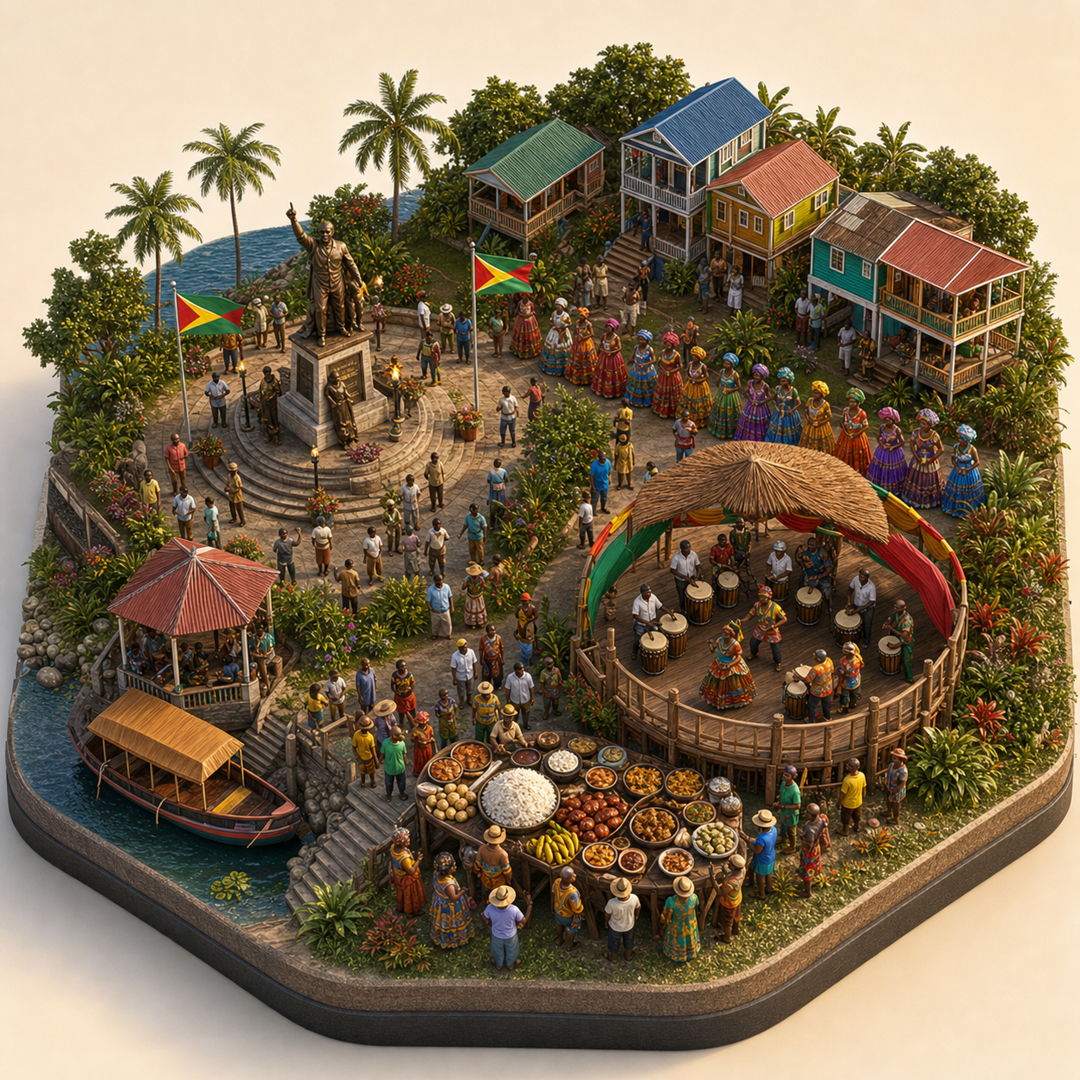
AI-generated immersive miniature model for MapDepth; not a documentary photograph.
- Freedom commemoration plaza: A monument-like object, wreaths, and open plaza express the shared emancipation-festival core. Remembrance festivals
- Afro-Caribbean dress row: Bright dress stalls and processional figures show the shared cultural identity display. Carnival festivals
- Cuyuni ridge court: A ridge court, river bend, and timber shelters place the scene in Bartica and Cuyuni-Mazaruni. Guyana festivals
- Festival rice table: Rice plates, bean bowls, and shared tables make the festival food visible. Harvest festivals
- Drum circle stage: Grouped drums, curved seating, and stage lights place Afro-Caribbean rhythm at the image edge. Carnival festivals
Traditions and customs
- freedom commemorations
- traditional dress displays
- drumming and dance
- ancestor homage
Food and symbols
- festival rice
- stews
- sweets
- 传统服饰
- 自由旗帜
- 鼓
- emancipation koto dress
- Maroon drum dance
When it is celebrated
Cuyuni-Mazaruni Afro-Caribbean Emancipation Festival is usually organized around Varies by emancipation day, freedom day, or Afro-descendant cultural calendar. Month: Oct / Nov
Cuyuni-Mazaruni Afro-Caribbean Emancipation Festival
Afro-Caribbean Emancipation Festivals matters because it turns memory, respect, and shared cultural continuity into a visible cultural system of time, place, family, and public ritual.
Cuyuni-Mazaruni Afro-Caribbean Emancipation Festival details
- Celebrates: Cuyuni-Mazaruni Afro-Caribbean Emancipation Festival celebrates or commemorates Afro-Caribbean Emancipation Festivals in Guyana · Cuyuni-Mazaruni, centered on freedom commemorations, traditional dress displays, drumming and dance, ancestor homage.
- Local roots: The local form developed through Guyana · Cuyuni-Mazaruni festival calendars, community organization, and public gathering spaces; timing usually follows Varies by emancipation day, freedom day, or Afro-descendant cultural calendar.
- Local history: Cuyuni-Mazaruni Afro-Caribbean Emancipation Festival turns the wider Afro-Caribbean Emancipation Festivals theme into visible local practice in Guyana · Cuyuni-Mazaruni: freedom commemorations, traditional dress displays, drumming and dance, ancestor homage. These activities make the festival a cultural scene shared by households, neighborhoods, and public spaces rather than only a date on the calendar.
- Cultural meaning: This local version strengthens Guyana · Cuyuni-Mazaruni community memory, seasonal rhythm, and local identity while preserving the core symbols of Afro-Caribbean Emancipation Festivals.
Signature practices
- freedom commemorations
- traditional dress displays
- drumming and dance
- ancestor homage
- festival rice sharing
Customs
- freedom commemorations
- traditional dress displays
- drumming and dance
- ancestor homage
Food
- festival rice
- stews
- sweets
Music / Dance
- drumming
- call-and-response singing
- street dance music
Symbols
- 传统服饰
- 自由旗帜
- 鼓
- emancipation koto dress
- Maroon drum dance
FAQ
What is Cuyuni-Mazaruni Afro-Caribbean Emancipation Festival?
Cuyuni-Mazaruni Afro-Caribbean Emancipation Festival is the local form of Afro-Caribbean Emancipation Festivals in Guyana · Cuyuni-Mazaruni, with customs such as freedom commemorations, traditional dress displays, drumming and dance, ancestor homage.
When is Cuyuni-Mazaruni Afro-Caribbean Emancipation Festival celebrated?
Cuyuni-Mazaruni Afro-Caribbean Emancipation Festival is usually organized around Varies by emancipation day, freedom day, or Afro-descendant cultural calendar. Month: Oct / Nov.
What traditions are associated with Cuyuni-Mazaruni Afro-Caribbean Emancipation Festival?
Common traditions include freedom commemorations, traditional dress displays, drumming and dance, ancestor homage, festival rice, stews.
Sources
Editorial sources support the festival background, local customs, and cultural notes on this guide.
- Feast · Encyclopaedia Britannica
- Lists of Intangible Cultural Heritage and the Register of Good Safeguarding Practices · UNESCO Intangible Cultural Heritage
Continue in the 3D map
Open the map focused on the Cuyuni-Mazaruni festival card, with country, region, and festival context preserved.
Continue in the 3D map